"CA, right?" Wrong. Your Commerce Degree Opens 10+ Doors—Here's What Nobody Tells You
Every commerce student gets asked the same question: "So, CA next?"
As if a commerce degree is a CA factory. As if finance begins and ends with statutory audit and tax filing. As if the only way to make it in finance is to spend 5 years clearing exams with a 15% pass rate.
Here's what that conversation never mentions:
The person who decides where a startup's ₹100 crore funding goes? Financial analyst. Not CA.
The person across the table when Tata acquires Air India? Investment banker. Not CA.
The people deciding which startups get VC funding? Private equity and venture capital professionals. Not CA.
The person managing ₹10,000 crore mutual fund portfolios? Portfolio manager. CFA, not CA.
Finance is not accounting with a calculator. Finance is reading risk, reading markets, and reading people. A commerce brain already knows how a business works. The rest? Can be taught. And the money follows that skill.
Analysts start at ₹8–12 lakhs. Investment banking crosses ₹20 lakhs. Private equity and VC professionals cross ₹40 lakhs.
CA is one path. A great path. But one door in a building full of them. And most students only ever hear about CA. This article is your map to the other 9 doors.
Why Commerce Students Deserve Better Career Counseling
Let me be direct: The Indian education system has failed commerce students when it comes to career guidance.
Walk into any commerce college, and the career counseling board shows exactly three options:
CA (Chartered Accountant)
CS (Company Secretary)
CMA India (Cost & Management Accountant)
All three are statutory roles. All three are compliance-heavy. All three are India-focused. And while they're excellent careers, they represent maybe 10% of actual finance career opportunities.The reality: The global finance industry has dozens of specialized, high-paying roles that commerce graduates are perfectly positioned for—but nobody tells them.
Why? Because:
Teachers don't know (they haven't worked in modern finance)
Parents don't know (they only know what was available in their generation)
Senior students don't know (they followed the same limited path)
Result: Brilliant commerce students who could have been investment bankers, portfolio managers, or risk analysts end up in back-office accounting jobs earning ₹4–5 lakhs when they could have been earning ₹15–25 lakhs in strategic finance roles.
This article changes that.
The 10 Finance Careers You've Never Heard About (But Should Pursue)
Let me introduce you to the full spectrum of finance careers available to commerce graduates. Each is a legitimate, high-paying path. Each values your commerce foundation. And most don't require CA.
Quick Overview: The Finance Career Landscape
Career Path
Entry Salary
5-Year Salary
Key Certification
Role Focus
Corporate Finance
₹6–10 LPA
₹15–25 LPA
CMA, CFA
Strategic planning, budgeting
Investment Banking
₹12–20 LPA
₹30–60+ LPA
CFA, MBA
M&A, capital raising
Portfolio Management
₹8–12 LPA
₹20–40 LPA
CFA
Managing investment portfolios
Asset Management
₹7–12 LPA
₹18–35 LPA
CFA, CMA
Fund management, research
Private Equity/VC
₹10–18 LPA
₹30–50+ LPA
CFA, MBA
Deal sourcing, investments
Credit Analysis
₹5–8 LPA
₹12–20 LPA
CFA, CMA
Risk assessment, lending
Compliance & Risk
₹6–10 LPA
₹15–25 LPA
CIA, CMA
Internal controls, audit
Financial Planning
₹4–8 LPA
₹12–25 LPA
CFA, CFP
Wealth management
Commercial Banking
₹5–9 LPA
₹12–22 LPA
Various
Relationship management
Public Accounting
₹5–8 LPA
₹12–20 LPA
CPA, CA
Audit, tax, advisory
Now let's break down each career path so you understand what they actually do, who they serve, and how you get there.
Career Path 1: Corporate Finance – The Strategic Business Partner
Corporate finance professionals are strategic business partners, not just number crunchers
What They Actually Do:
Corporate finance professionals work inside companies (not consulting firms or banks) to make strategic financial decisions. They're not just "accountants." They're business strategists who happen to specialize in finance.
Day-to-day responsibilities:
Financial planning & analysis (FP&A): Building budgets, forecasting revenue, analyzing business performance
Capital structure decisions: Should we raise debt or equity? What's the optimal capital mix?
Investment evaluation: Should we build this new factory? Acquire that competitor? Expand to new markets?
Strategic projects: Supporting M&A, new product launches, market expansion
Real Example: A corporate finance analyst at Flipkart analyzes whether launching grocery delivery in tier-2 cities will be profitable. They build financial models, assess risks, project cash flows, and present recommendations to senior management. When the decision is made, they track performance against plan.
Who Hires:
Large corporations (Reliance, Tata, Aditya Birla, Mahindra)
Manufacturing (Maruti, Hero MotoCorp, Asian Paints)
Salary Trajectory:
Entry-level (Analyst): ₹6–10 LPA
3–5 years (Senior Analyst): ₹12–18 LPA
5–8 years (Manager): ₹18–28 LPA
8+ years (Director/VP Finance): ₹35–60+ LPA
Best Certifications:
US CMA (Certified Management Accountant): Perfect fit—focuses on strategic finance, FP&A, performance management
CFA (Chartered Financial Analyst): Great for investment analysis, financial modeling
MBA Finance: Adds leadership credentials
Why Commerce Students Excel Here:
You already understand how businesses make money (revenue models, cost structures, margins). Corporate finance is applying that knowledge to real strategic decisions. Your commerce foundation is 60% of what you need; the certifications teach the remaining 40% (advanced modeling, valuation, capital structure).
Path to Entry:
BCom + CMA/CFA certification (12–18 months)
Entry-level analyst role (financial planning, budgeting)
Career Path 2: Investment Banking – The Deal Makers
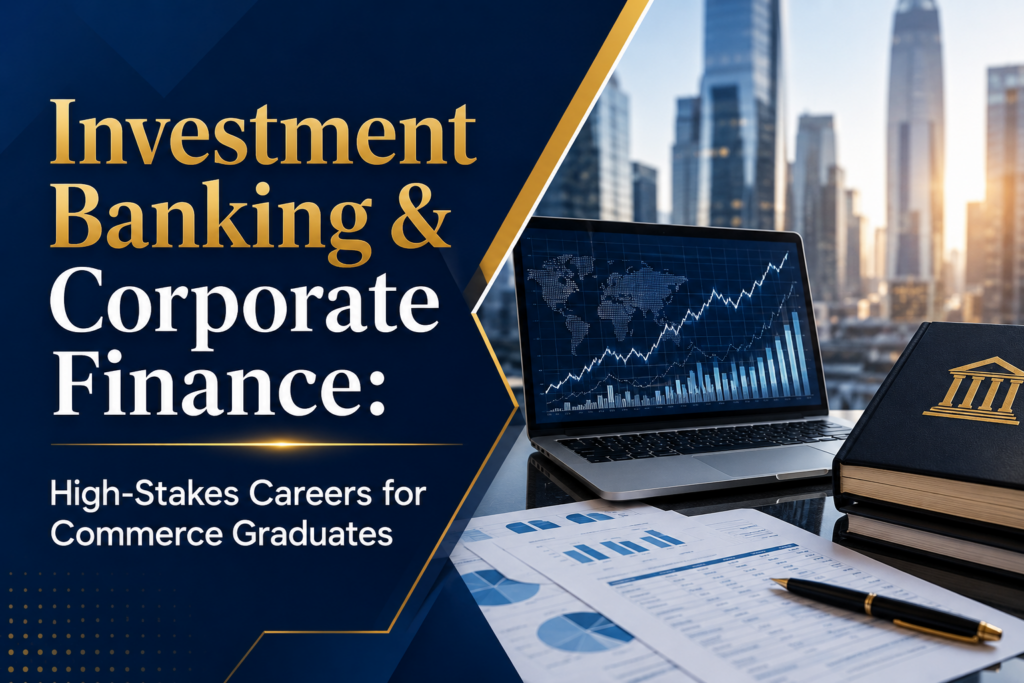
Investment bankers are the intermediaries in high-stakes corporate finance transactions
What They Actually Do:
Investment bankers are the intermediaries in high-stakes corporate finance transactions. When companies want to raise capital, merge with competitors, or go public, investment banks structure and execute those deals.
Core Functions:
Mergers & Acquisitions (M&A): Advising companies on buying/selling businesses (e.g., Tata buying Air India)
Capital raising: Helping companies raise money through IPOs, bonds, or private placements
Financial advisory: Strategic advice on capital structure, valuation, deal structuring
Pitch books & models: Creating presentations and financial models to win clients
Real Example: When Zomato went public in 2021, investment banks (Kotak Mahindra, Morgan Stanley, etc.) advised on valuation, structured the IPO, found investors, and executed the listing. They earned tens of crores in fees for that single deal.
Who Hires:
Global Investment Banks: Goldman Sachs, Morgan Stanley, JP Morgan, Citi, Barclays
Indian Investment Banks: Kotak Investment Banking, ICICI Securities, Avendus, Axis Capital
Reality Check: Investment banking is elite but brutal. 70–90 hour work weeks. High stress. Intense competition. But also: fastest path to ₹1 crore+ salaries and unmatched exit opportunities (private equity, hedge funds, CFO roles).
Best Certifications:
CFA (Chartered Financial Analyst): Gold standard for investment banking; shows mastery of valuation, financial analysis
Top MBA: IIM A/B/C, ISB, or global MBA (Wharton, Harvard, LBS)
CMA: Useful for financial modeling foundations
Why Commerce Students Fit:
Investment banking is fundamentally about understanding businesses—their revenue models, competitive dynamics, growth potential. Commerce students already have this foundation. The CFA or MBA adds technical skills (valuation, modeling, deal structuring).
Path to Entry:
BCom + CFA Level 1–2 + strong Excel/modeling skills
Entry through campus placements (if top college) or off-campus applications
Alternatively: Start in corporate finance or equity research, then lateral to IB
Build expertise in specific sectors (tech, healthcare, energy)
Career Path 3: Portfolio Management – Managing Billions
Portfolio managers decide which stocks to buy, when to sell, and how to allocate capital
What They Actually Do:
Portfolio managers are the people managing mutual funds, pension funds, and large institutional portfolios. They decide which stocks to buy, when to sell, and how to allocate capital to maximize returns while managing risk.
Risk management: Ensuring portfolio stays within risk limits
Performance analysis: Tracking returns vs. benchmarks
Client reporting: Explaining performance to institutional clients
Real Example: A portfolio manager at HDFC Mutual Fund manages a ₹5,000 crore large-cap equity fund. They research 200+ companies, build a 40–50 stock portfolio, rebalance quarterly, and aim to outperform the Nifty 50 index.
Who Hires:
Mutual Fund Houses: HDFC MF, ICICI Prudential, SBI MF, Axis MF, Nippon India
CFA (Chartered Financial Analyst): Mandatory for serious portfolio management roles; teaches equity research, valuation, portfolio theory
PRM (Professional Risk Manager): For risk-focused portfolios
CAIA (Chartered Alternative Investment Analyst): For alternative assets
Why Commerce Students Excel:
Portfolio management requires deep understanding of businesses, financial statements, and competitive dynamics—all strengths of commerce graduates. CFA fills the quantitative gaps (statistics, portfolio theory, derivatives).
Path to Entry:
BCom + CFA (all 3 levels recommended)
Start as equity research analyst or investment analyst
Career Path 4: Asset Management – The Fund Strategists
What They Actually Do:
Asset management is broader than portfolio management. Asset managers oversee entire investment strategies, product development, and client relationships for mutual funds, ETFs, and alternative investments.
Responsibilities:
Fund strategy: Designing investment products (e.g., Should we launch a tech-focused small-cap fund?)
Investment research: Identifying investment themes and opportunities
Risk management: Ensuring portfolios comply with regulatory limits
Private Banks: JP Morgan Asset Management, Goldman Sachs Asset Management
Alternative Asset Managers: Sequoia Capital, Accel Partners, Multiples PE
Salary Trajectory:
Analyst: ₹7–12 LPA
Senior Analyst/Associate: ₹15–25 LPA
Asset Manager: ₹25–40 LPA
Head of Asset Management: ₹50 LPA–1+ crore
Best Certifications:
CFA: Industry standard for asset management
CMA: Valuable for cost analysis and performance management
FRM (Financial Risk Manager): For risk-focused asset management
Path to Entry:
BCom + CFA
Start as research analyst or fund analyst
Specialize in asset class (equities, fixed income, alternatives)
Build reputation through performance and research quality
Career Path 5: Credit Analysis – The Risk Evaluators
Credit analysts assess creditworthiness and decide who gets loans and on what terms
What They Actually Do:
Credit analysts assess the creditworthiness of borrowers—whether individuals, companies, or governments. They decide: Should we lend? How much? At what interest rate? What are the risks?
Core Responsibilities:
Financial analysis: Analyzing financial statements to assess repayment capacity
Risk assessment: Identifying factors that could lead to default
Credit rating: Assigning credit scores and ratings
Portfolio monitoring: Tracking existing loans for early warning signs
Real Example: A credit analyst at HDFC Bank evaluates a ₹50 crore loan request from a mid-size manufacturing company. They analyze 3 years of financials, assess cash flow stability, review industry risks, and recommend approval with specific terms.
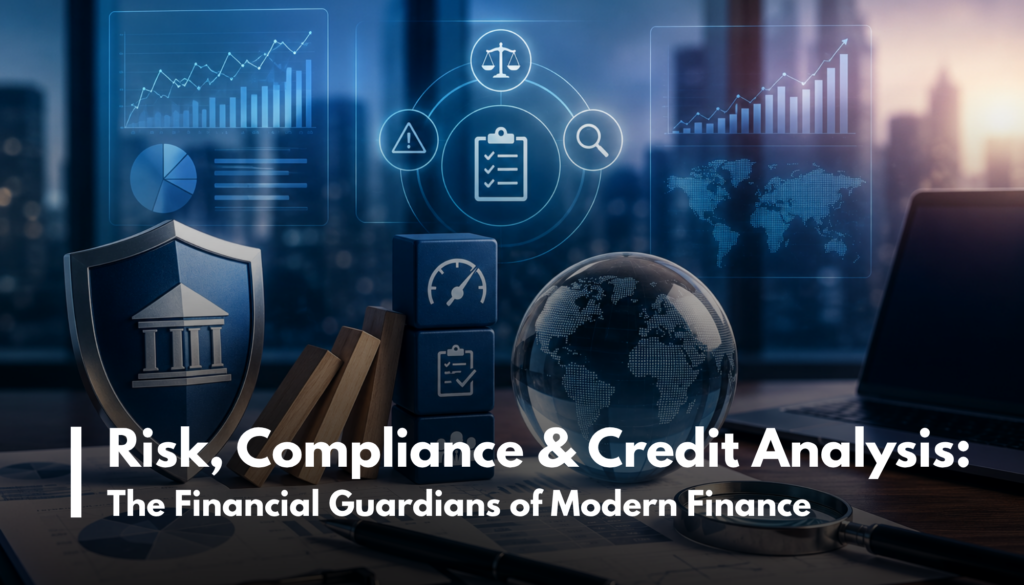
Career Path 6: Compliance & Internal Control – The Financial Guardians
What They Actually Do:
Compliance and internal control professionals ensure companies follow laws, regulations, and internal policies. They're the financial police—but also strategic advisors preventing fraud, corruption, and operational failures.
Core Functions:
Regulatory compliance: Ensuring adherence to RBI, SEBI, IRDAI, income tax regulations
Internal audit: Reviewing business processes to identify control weaknesses
Fraud prevention: Designing systems to prevent financial fraud
Risk assessment: Identifying and mitigating operational, compliance, and reputational risks
Corporate governance: Ensuring ethical business practices
Real Example: A compliance officer at PhonePe ensures the company follows RBI guidelines for digital payments, conducts regular audits to prevent money laundering, and trains employees on anti-corruption policies.
Large Corporates: Every major company needs compliance teams
Salary Trajectory:
Compliance Analyst: ₹6–10 LPA
Internal Auditor: ₹8–14 LPA
Compliance Manager: ₹15–22 LPA
Head of Compliance/Chief Compliance Officer: ₹30–50+ LPA
Best Certifications:
CIA (Certified Internal Auditor): Global standard for internal audit professionals
CMA: Excellent for understanding internal controls and cost management
CISA (Certified Information Systems Auditor): For IT compliance
Why Commerce Students Excel:
Compliance requires understanding business processes, accounting systems, and financial controls—all commerce fundamentals. CIA or CMA adds specialized knowledge of audit frameworks, risk management, and regulatory requirements.
Path to Entry:
BCom + CIA or CMA
Entry-level internal audit or compliance analyst role
Gain experience across different business functions
Specialize in specific areas (financial compliance, operational audit, IT audit)
Career Path 7: Financial Planning – The Wealth Architects
Financial planners help individuals and families achieve their financial goals
What They Actually Do:
Financial planners help individuals and families achieve financial goals through personalized advice on investments, insurance, tax planning, retirement planning, and estate planning.
Services Provided:
Investment planning: Recommending mutual funds, stocks, bonds based on risk appetite
Retirement planning: Calculating how much to save for retirement
Tax optimization: Structuring finances to minimize tax burden
Insurance planning: Determining adequate life, health, and property insurance
Estate planning: Helping with wills, trusts, wealth transfer
Real Example: A financial planner helps a 35-year-old IT professional earning ₹25 LPA plan for children's education (₹50 lakhs needed in 12 years), retirement (₹5 crore corpus needed), and current tax savings through optimal investments.
CFP (Certified Financial Planner): India's standard for financial planning
CFA: Adds credibility for investment advice
CWM (Chartered Wealth Manager): For high-net-worth clients
Why Commerce Students Fit:
Financial planning requires understanding of investments, tax laws, insurance—all covered in commerce curriculum. Certification adds specialized technical skills and client management.
Path to Entry:
BCom + CFP or CFA
Start at wealth management firm or bank
Build client relationships and expertise
Option to become independent financial advisor after 5–7 years
Career Path 8: Commercial Banking – The Relationship Managers
What They Actually Do:
Commercial bankers manage relationships with business clients, providing loans, credit facilities, cash management services, and financial products to companies.
Core Functions:
Relationship management: Being the primary point of contact for corporate clients
Credit evaluation: Assessing loan applications from businesses
Product sales: Cross-selling bank products (trade finance, forex, treasury services)
Portfolio management: Managing a portfolio of corporate clients
Risk monitoring: Tracking client financial health and loan repayment
Who Hires:
Public Sector Banks: SBI, Bank of Baroda, Punjab National Bank
Private Banks: HDFC, ICICI, Axis, Kotak, Yes Bank
Foreign Banks: Standard Chartered, Citi, HSBC, DBS
Salary Trajectory:
Management Trainee: ₹5–9 LPA
Relationship Manager: ₹10–16 LPA
Senior RM: ₹18–28 LPA
Regional Manager/Head: ₹35–55 LPA
Best Certifications:
CAIIB (Certified Associate of Indian Institute of Bankers): India-specific banking certification
CFA: For investment banking and treasury roles
CMA: For credit analysis and financial evaluation
Path to Entry:
BCom + Bank entrance exams (IBPS PO, SBI PO) or direct recruitment
Start as management trainee or relationship officer
Build client portfolio and sales track record
Progress to senior RM → branch manager → regional head
Career Path 9: Public Accounting – The Audit & Tax Experts
What They Actually Do:
Public accountants work at accounting firms providing audit, tax, and advisory services to multiple clients. They're external consultants helping companies with financial reporting, tax compliance, and business advisory.
Services Provided:
External audit: Certifying that financial statements are accurate
Career Path 10: Finance Academia & Research – The Knowledge Creators
What They Actually Do:
Finance professors and researchers teach finance, conduct research, and contribute to academic and industry knowledge. They work at universities, business schools, and research institutions.
Responsibilities:
Teaching: Delivering lectures, designing courses, mentoring students
Research: Publishing papers in academic journals
Consulting: Advising companies and governments on financial policy
Thought leadership: Speaking at conferences, writing books
Plus: Consulting income, book royalties, speaking fees
Best Certifications:
PhD in Finance: Almost mandatory for top institutions
CFA: Adds industry credibility
FRM, CMA: For specialized teaching (risk, management accounting)
Path to Entry:
BCom → MCom/MBA Finance → PhD
Alternatively: Industry experience + CFA → Teaching at professional institutes
Publish research papers while studying
Apply for faculty positions
The Certification Roadmap: Which One for Which Career?
Now you know the careers. But which certification should you pursue? Here's the strategic mapping:
CFA (Chartered Financial Analyst) – The Investment Professional
Best For:
Investment Banking ⭐⭐⭐⭐⭐
Portfolio Management ⭐⭐⭐⭐⭐
Asset Management ⭐⭐⭐⭐⭐
Equity Research ⭐⭐⭐⭐⭐
Private Equity/VC ⭐⭐⭐⭐
What It Teaches: Equity valuation, financial analysis, portfolio management, derivatives, ethics
Duration: 2–4 years (3 levels) | Cost: ₹2.5–3.5 lakhs total | Global Recognition: 180+ countries
Starting Salary Impact: ₹8–15 LPA (vs. ₹4–6 LPA without)
Explore AI-CFA program →
US CMA (Certified Management Accountant) – The Strategic Finance Expert
Best For:
Corporate Finance ⭐⭐⭐⭐⭐
Financial Planning & Analysis ⭐⭐⭐⭐⭐
Cost Management ⭐⭐⭐⭐
Credit Analysis ⭐⭐⭐⭐
Performance Management ⭐⭐⭐⭐
What It Teaches: Management accounting, financial planning, performance management, risk management, internal controls
Duration: 12–18 months (2 exams) | Cost: ₹1.7–2.5 lakhs | Global Recognition: 150+ countries
Starting Salary Impact: ₹6–10 LPA (vs. ₹4–5 LPA without)
Explore our US CMA program →
CIA (Certified Internal Auditor) – The Risk & Compliance Specialist
Best For:
Internal Audit ⭐⭐⭐⭐⭐
Compliance & Internal Control ⭐⭐⭐⭐⭐
Risk Management ⭐⭐⭐⭐
Fraud Investigation ⭐⭐⭐⭐
Corporate Governance ⭐⭐⭐⭐
What It Teaches: Internal audit frameworks, risk assessment, control evaluation, fraud detection, governance
Duration: 12–18 months (3 exams) | Cost: ₹1.5–2.5 lakhs | Global Recognition: 190+ countries
Starting Salary Impact: ₹6–12 LPA (vs. ₹4–6 LPA without)
Explore CIA US program →
US CPA (Certified Public Accountant) – The Accounting & Tax Professional
Best For:
Public Accounting ⭐⭐⭐⭐⭐
External Audit ⭐⭐⭐⭐⭐
Tax Advisory ⭐⭐⭐⭐⭐
Financial Reporting ⭐⭐⭐⭐
Big 4 Careers ⭐⭐⭐⭐⭐
What It Teaches: US GAAP, auditing standards, taxation, business law, financial reporting
Duration: 6–12 months (4 exams) | Cost: ₹2–3 lakhs | Global Recognition: 180+ countries (especially US, Middle East, Australia)
Starting Salary Impact: ₹8–14 LPA (vs. ₹5–7 LPA without)
Explore US CPA program →
The Strategic Decision Matrix: Your Next Steps
Here's how to decide which path to pursue:
If you love analyzing businesses and markets:
→ Investment Banking or Portfolio Management
→ Best certification: CFA
→ Timeline: 2–4 years to CFA + strong Excel/modeling skills
If you prefer strategic planning inside companies:
→ Corporate Finance
→ Best certification: US CMA
→ Timeline: 12–18 months to CMA + Excel/Power BI skills
If you're risk-aware and process-oriented:
→ Compliance, Internal Audit, or Credit Analysis
→ Best certification: CIA or CMA
→ Timeline: 12–18 months + specialized experience
If you want to work with people and build relationships:
→ Financial Planning or Commercial Banking
→ Best certification: CFP (for planning) or banking certifications
→ Timeline: 1–2 years
If you want global mobility and accounting expertise:
→ Public Accounting
→ Best certification: US CPA
→ Timeline: 6–12 months for CPA
Why Most Students Still Only Hear About CA
Let me address the elephant in the room: If these careers are so great, why doesn't anyone talk about them?
Three reasons:1. Information Asymmetry
Teachers know CA because it's been around for 75 years
Investment banking, portfolio management, etc., are relatively newer in India (post-1991 liberalization)
Nobody teaches modern finance careers in commerce colleges
2. Marketing Power
ICAI (CA institute) has massive brand presence in every college
CFA Institute, IMA (CMA body), IIA (CIA body) have limited presence in India
Result: Students only see CA marketing materials
3. Path Dependency
Your seniors did CA → they recommend CA → you do CA → next batch does CA
Breaking this cycle requires deliberate research (like reading this article)
The truth: CA is excellent for statutory audit and compliance. But if your interest is strategic finance, investment analysis, risk management, or global careers—there are better, faster, more lucrative paths.
Real Talk: The Money Comparison
Let's be brutally honest about salaries because that's what most students care about:
5-Year Salary Comparison (Realistic Estimates)
Career Path
Year 0
Year 3
Year 5
Peak (10–15 years)
CA (India)
₹0–1 LPA (articleship)
₹6–10 LPA
₹10–18 LPA
₹25–50 LPA
Investment Banking
₹12–20 LPA
₹25–40 LPA
₹40–70 LPA
₹1–3 crore
Portfolio Management (CFA)
₹8–12 LPA
₹18–28 LPA
₹25–40 LPA
₹50 LPA–1+ crore
Corporate Finance (CMA)
₹6–10 LPA
₹12–18 LPA
₹18–28 LPA
₹35–70 LPA
Compliance (CIA)
₹6–10 LPA
₹12–18 LPA
₹18–25 LPA
₹30–55 LPA
Public Accounting (CPA)
₹8–12 LPA
₹12–20 LPA
₹20–32 LPA
₹50 LPA–2+ crore (partner)
Key Insight: Investment banking and portfolio management (CFA path) have the highest salary potential but also the most competition and stress. Corporate finance and compliance (CMA/CIA) offer excellent work-life balance with strong salaries. CA remains strong for India-focused statutory careers.
Common Myths About Non-CA Finance Careers
Myth 1: "Only CA has job security"Reality: Every major company needs corporate finance, compliance, and risk professionals. Financial services need portfolio managers and credit analysts. Job security is about skills, not just credentials.
Myth 2: "CFA/CMA/CIA are not recognized in India"Reality: Check job postings on Naukri or LinkedIn. Filter for "CFA" or "CMA"—you'll find thousands of openings at top companies. CFA is especially preferred for investment roles over CA.
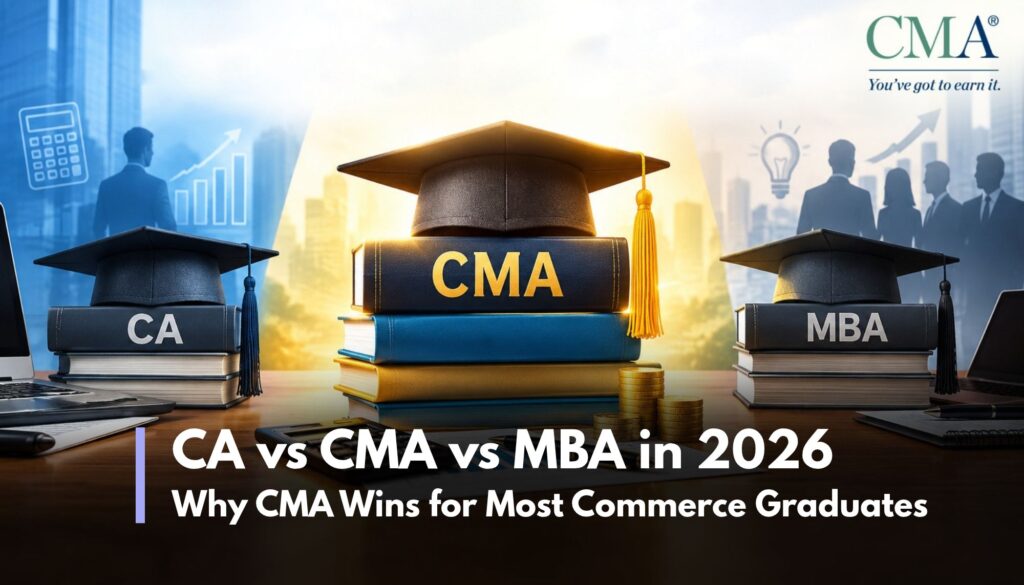
Myth 3: "You need CA to earn well in finance"Reality: Top investment bankers, portfolio managers, and CFOs often have MBAs or CFAs, not CA. Salary depends on role and skills, not the specific credential.
Myth 4: "Global certifications are expensive"Reality: CFA costs ₹2.5–3.5 lakhs total (over 2–4 years). CMA costs ₹1.7–2.5 lakhs (over 12–18 months). CA coaching + exam fees + 5 years of lost income (during articleship at ₹5–15k/month) actually costs more when you factor in opportunity cost.
Myth 5: "You must do CA first, then others"Reality: This is the worst strategy. CA takes 5 years. If you're interested in investment banking or portfolio management, do CFA directly. If you want corporate finance, do CMA. Don't waste 5 years on CA if it's not aligned with your goals.
How to Choose Your Path: A Framework
Ask yourself these questions:
1. Do you prefer working for one company (internal) or many clients (external)?
- Internal: Corporate finance, compliance, risk management
- External: Investment banking, public accounting, consulting
2. Do you love analyzing markets and investments?
- Yes: Investment banking, portfolio management, asset management (CFA path)
- No: Corporate finance, compliance, credit analysis (CMA/CIA path)
3. Do you want to work in India long-term or plan to move abroad?
- India-focused: CA, India CMA, CFP
- Global mobility: CFA, US CMA, CIA, US CPA
4. How important is work-life balance vs. extreme financial success?
- Balance: Corporate finance, compliance, credit analysis, commercial banking
- Success (high stress): Investment banking, private equity, portfolio management
5. What's your risk tolerance for career choice?
- Low risk (proven path): CA, banking exams
- Medium risk (growing fields): CMA, CIA, CFP
- High risk/reward: CFA, MBA from top school → investment banking
Your Action Plan: Next 30 Days
If you're serious about exploring finance careers beyond CA, here's what to do:
Week 1: Research & Self-Assessment
Read all 5 articles in this series (links below)
Take career assessment: Which roles align with your interests?
Research 3–5 companies in your preferred sector on LinkedIn
Look at their finance team profiles (what certifications do they have?)
Week 2: Skill Inventory & Gap Analysis
Assess your current skills: Excel, financial modeling, accounting knowledge
Identify certification that aligns with your goal (CFA/CMA/CIA/CPA)
Download sample exam papers to understand difficulty level
Watch YouTube videos of professionals in your target role
Week 3: Certification Decision
Compare certification timelines, costs, and career impact
Speak to 2–3 professionals who have that certification (LinkedIn DMs)
Make decision: Which certification will you pursue?
Shortlist training providers (like IFCPLTD)
Week 4: Take Action
Enroll in certification program or start self-study
Build Excel and financial modeling skills (free online resources)
Start following finance companies and thought leaders on LinkedIn
Create LinkedIn profile highlighting your career goal
The difference between dreamers and achievers: Dreamers read articles and feel inspired. Achievers create a plan and execute it within 30 days.
Which will you be?
The Bottom Line: Your Career, Your Choice
Every commerce student gets asked, "So, CA next?"
Now you know the answer: "Maybe. But let me tell you about the other 9 paths first."
CA is one door. A great door. But this building has 10 doors, and some might fit you better.
Investment banking if you want elite compensation and can handle pressure.Portfolio management if you love markets and want to manage billions.Corporate finance if you want to be a strategic business partner.Compliance if you're detail-oriented and risk-aware.Financial planning if you love helping people.Credit analysis if you're analytical and risk-focused.Public accounting if you want diverse experience with global mobility.
All legitimate. All lucrative. All available to commerce graduates.
The question isn't "CA or nothing?"
The question is: "Which finance career aligns with who I am and where I want to go?"
Your commerce degree opened the door. Now it's time to choose which room you'll walk into.
Explore IFCPLTD Certification Programs
Ready to start your certification journey? IPFC offers comprehensive training for:
Comprehensive study materials aligned with 2026 exam patterns
Real-world case studies and practical applications
Placement support and career guidance
The investment: ₹1.5–3 lakhs (depending on program)
The return: ₹2–5 LPA immediate salary increase + lifelong career acceleration
Frequently Asked Questions
Q1. Is it too late to switch from CA to CFA/CMA?
+
Not at all. Many students start CA, realize it's not for them, and switch. If you're within 1–2 years of CA, it might make sense to finish (sunk cost). But if you're just starting and realize investment banking or corporate finance is your goal, switching to CFA or CMA is smarter.
Q2. Can I do both CA and CFA/CMA?
+
Yes, but it's time-intensive. The better strategy: Complete one first (whichever aligns with your immediate career goal), get 2–3 years of experience, then add the second if needed. Dual credentials are impressive but not necessary for most roles.
Q3. Which certification has the best ROI?
+
Depends on your career path. For investment banking/portfolio management: CFA (highest ROI). For corporate finance: CMA (fastest ROI—12-18 months). For compliance: CIA. For public accounting: CPA. Choose based on your goal, not generic ROI.
Q4. Do I need an MBA after these certifications?
+
Not always. CFA/CMA/CIA/CPA are professional credentials that often substitute for an MBA in finance. However, if you want general management roles or leadership positions, an MBA from a top school (IIM/ISB) adds value after 5–7 years of experience.
Q5. What if I'm already working? Can I pursue these part-time?
+
Absolutely. All four certifications (CFA, CMA, CIA, CPA) are designed for working professionals. You can study part-time (15–20 hours/week) and complete within 1–2 years while working full-time.
Q6. Are these certifications recognized by Indian companies?
+
Yes. Check job postings on Naukri.com or LinkedIn for "CFA," "CMA," or "CIA"—you'll find thousands of openings. Top companies (Goldman Sachs, JP Morgan, HDFC, ICICI, Deloitte, PwC) actively prefer these certifications for finance roles.
Q7. How do I decide between CMA and CA?
+
Choose CA if: You want statutory audit, tax practice, or independent CA practice in India. Choose CMA if: You want corporate finance, FP&A, cost management, or global mobility. CMA is faster (12–18 months vs. 4.5 years) and more aligned with strategic finance roles.
Q8. Can commerce students without math background do CFA?
+
Yes. CFA Level 1 has basic quantitative methods, but commerce students with strong accounting and finance fundamentals do well. If you were comfortable with statistics in BCom, you'll be fine. IFCPLTD's CFA program includes quantitative refreshers for commerce students.
References & Data Sources:
All salary figures, career data, and certification information in this article are sourced from verified 2026 sources including:
Salary surveys
Career paths
Professional body websites: CFA Institute, IMA (CMA), IIA (CIA), AICPA
Corporate Governance has become critical to sustaining investor confidence, ensuring compliance, and enhancing organizational performance. The Certified Internal Auditor (CIA)...
In today’s interconnected world, professional qualifications that are globally recognized can open up vast career opportunities, especially for Indian students...
What is CMA? CMA stands for Certified Management Accountant. This qualification is an approved professional qualification from International Federation of...
What is CPA? CPA stands for Certified Public Accountant. This qualification is an approved professional qualification from International Federation of...